


Story highlights
-
At a glance
- Industry – Freight and Logistics
- Region – Global
- Project – Modernization of Legacy ERP
-
Products and services
- Microsoft Dynamics 365 Finance and Supply Chain Management
-
Result Snapshot
- Stronger internal controls and governance
- Unified Master Data Management (MDM)
- Established DX foundation for financial reporting operations and data management
- Standardized data for consistent group-wide evaluation and approval
Strengthening Global Governance and Building a Data-Driven Management Foundation
Dynamics 365 Deployed Across Approximately 40 Sites in 22 Countries and Regions in Just Two and a Half Years
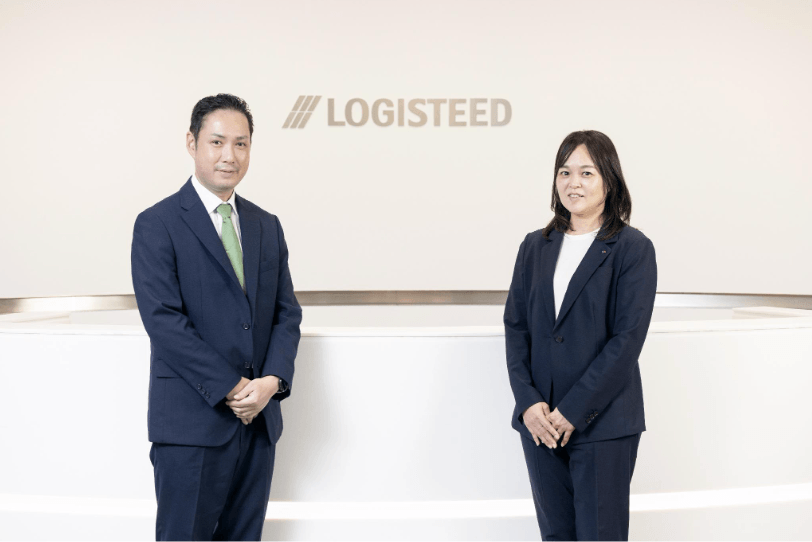
LOGISTEED, a provider of a wide range of logistics solutions, operates in more than 1,000 locations in 30 countries and regions, and provides global third-party logistics (3PL)1 and freight forwarding services. To achieve its vision, LOGISTEED2030 (¥1.5 trillion in revenue and an overseas ratio of more than 50%, etc.), the company is pursuing further growth by implementing Microsoft Dynamics 365 (hereinafter referred to as Dynamics 365) to strengthen global governance and establish a foundation for data-driven management. The implementation created an environment that strengthens financial governance and standardizes business processes across its operations in Asia, Europe, and North America.
*1: Third-party logistics (3PL): Logistics model which the client comprehensively outsources its logistics operations to a third-party service provider.
Challenges
- Strengthen global governance and replace the aging ERP system.
- Standardize the global data model to improve data utilization and reduce the burden of data analysis.
- Improve person-dependent business processes and approval processes that pose governance risks.
Results
- Achieved stronger internal controls and governance through the global deployment of Dynamics 365.
- Unified Master Data Management (MDM) for managing master data and established a DX foundation for financial reporting operations and data-driven management.
- Standardized the data model, enabling data utilization based on common group-wide evaluation criteria and appropriate approval processes.
BACKGROUND: Launching the modernization of the legacy ERP system and strengthening governance
With a global logistics network spanning across Asia, Europe, and North America, LOGISTEED recognized that strengthening governance across the entire group was an urgent priority to achieve its vision “LOGISTEED2030”.
We faced numerous challenges, including aging ERP systems which had been operating by the companies that had joined through M&A, rising maintenance and support costs, and systems at overseas sites that had become black boxes. Person-dependent business processes and manual operations also posed potential risks. In addition, inconsistent data and code structures created a significant burden for data analysis and reporting, making it necessary to establish a common data model.
To address these issues, the company decided to build a foundation that would enable the visualization of corporate value and support growth strategy planning through globally integrated data, while also strengthening governance to meet accountability requirements. Under the project, LOGISTEED Solutions took responsibility for project management, while Hitachi Solutions Asia Pacific and Hitachi Solutions provided implementation expertise and deployment support.
Following internal approval in June 2022, the project moved forward with the development of a global template, the implementation of a pilot system, and the creation of a phased regional rollout plan.
Our goal was to establish the platform across approximately 40 sites in 22 countries and regions, including overseas subsidiaries (as of June 2022), within the limited timeframe of two and a half years. Achieving this required strong governance structure led by centralized leadership, as well as local implementation teams that could accommodate differences in language, tax regulations, and business practices across countries and regions. We established a structure in which the Japan-based team oversaw project management and decision-making, while local teams in each overseas region drove implementation. By maintaining close collaboration with around 20 lead members on both sides, we were able to identify potential risks early, proactively address issues, accelerate project execution, and maintain overall governance.
APPROACH: Selecting Dynamics 365 for its licensing costs and extensibility
As part of the project to establish a common platform, the team developed a global template. Its objectives were to strengthen internal controls and governance, standardize business processes, establish a common data model, and improve control over approval processes.
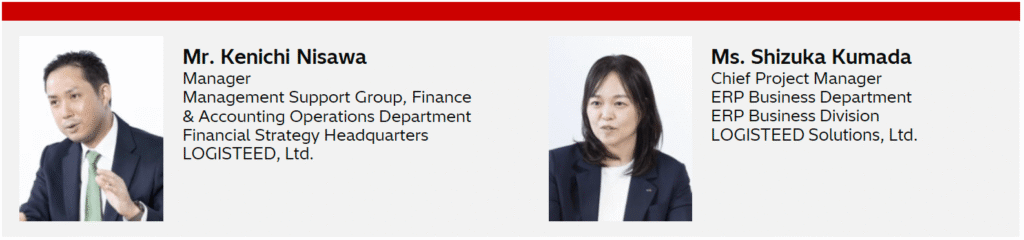
“To fulfill our accountability requirements, we needed greater transparency in the approval process. One of the reasons we selected Dynamics 365 was that expense management and procurement modules were already available out of the box,” says Mr. Kenichi Nisawa.
“The rollout began in Malaysia and was planned to proceed in phases and in parallel across Asia, Europe, and North America. Hitachi Solutions Asia Pacific’s extensive implementation experience in various countries and expertise in local tax regulations greatly assisted us in determining rollout priorities and risk mitigation approaches. They sincerely worked with us to determine how to assign global resources to the right roles to achieve our target schedule.
We also had a source code management framework, including Git Flow², a distributed version control workflow, as well as a release management framework for each regional server to ensure project quality. Hitachi Solutions provided accurate support in these areas. By registering all issues and changes in Azure DevOps³, we were able to monitor project progress and issue status in real time through dashboards. In addition, we established a weekly change approval cycle to emphasize rapid decision-making. Their outstanding Azure DevOps operations and close communication among the teams made a significant contribution. Supported by the Hitachi Solutions Group’s experience, teamwork, and technical capabilities, I believe we were able to complete the rollout on schedule,” says Ms. Shizuka Kumada.
*2: Git Flow is a branching strategy that defines how to manage feature development, releases, and hotfixes using multiple branch types.
*3: Azure DevOps is a tool for planning, code management, CI/CD automation, and test management.
RESULTS: Strengthening governance at the operational level across all locations
Through the global deployment of Dynamics 365, LOGISTEED strengthened its internal controls and governance and achieved a number of benefits. These included the unification and standardization of the billing, expense reimbursement, and procurement systems; seamless integration from AR/AP (accounts receivable, accounts payable, and accrued liabilities management) to accounting within the ERP system; the addition of fixed asset and lease management functions; and support for country-specific tax regulations.
The implementation of Master Data Management (MDM) also made it possible to establish a DX foundation through common master data integration and to automate the aggregation of HR data. In addition, the monthly financial consolidation process, which summarizes financial statement results into profit and loss statements and balance sheets, was reduced from approximately eight hours per company per month to less than 10 minutes.
Mr. Kenichi Nisawa also expressed his satisfaction that the establishment of a common data model foundation has created an environment for realizing data-driven management.
“Previously, at some overseas subsidiaries, the same person was responsible for both data entry and approval, which posed a governance issue. With Dynamics 365, in addition to the standard approval processes, we added our own company-specific processes. By configuring a total of 27 approval processes, we strengthened our internal controls,” says Mr. Kenichi Nisawa.
OUTLOOK: Accelerating data-driven management through greater data utilization
As LOGISTEED continues the global rollout of Dynamics 365, it is also undertaking various initiatives at locations where the implementation has already been completed. Looking ahead, Ms. Shizuka Kumada says:
“We believe it is important to introduce new features, promote the use of existing functions, increase understanding of the benefits of the implementation, and conduct regular interviews with users at each site.”
Mr. Kenichi Nisawa also shared his outlook:
“By using a standardized ERP system, even our small overseas subsidiaries are now under consistent governance, establishing a foundation for expanding our overseas business. Going forward, we will further promote global ERP standardization and work on implementing a cockpit that accelerates data-driven management, with the aim of using data analysis to drive top-line growth.”
The Hitachi Solutions Group will continue helping LOGISTEED Group’s growing global supply chain logistics business with the power of IT and worldwide expertise backed by the Group’s comprehensive capabilities.